Skip to content
The global telecommunications sector is currently navigating a fundamental restructuring of how connectivity is provisioned, managed, and amortized. As enterprises scale their mobile workforces, the transition from physical plastic hardware to software-defined identity modules has become a central focus for Chief Financial Officers (CFOs) and Technical Operations leads. This study explores the question: What are the benefits of using eSIM? from a strictly economic and functional perspective. By analyzing the friction points of legacy subscriber identity modules against the streamlined efficiency of eSIM Mobile architectures, we can model a definitive Return on Investment (ROI) for modern digital transformation initiatives.
Key Takeaways for Stakeholders
- Infrastructure Amortization: Digital profiles eliminate the need for physical warehouse overhead and security logistics.
- Provisioning Velocity: Deployment time is reduced from several business days to under sixty seconds through Remote SIM Provisioning (RSP).
- Financial Optimization: Migration to digital cellular technology can reduce connectivity-related OpEx by up to 85% for large-scale fleets.
- Technical Longevity: The eUICC architecture allows for multiple carrier profiles, effectively future-proofing device hardware.
- Security Posture: Embedded modules eliminate the risk of physical SIM swapping and hardware theft.
1. The Macroeconomic Shift: Strategic Benefits of Digital Profiles
What are the benefits of using eSIM? The core strategic advantages lie in operational agility, logistics cost elimination, and enhanced security. By utilizing a digital cellular profile, organizations can switch network providers over-the-air (OTA) without the need for physical inventory, significantly reducing the Total Cost of Ownership (TCO) while enabling eSIM free initial testing phases for global connectivity deployments.
In the legacy model, connectivity was tethered to a physical asset—the plastic SIM. This created a significant “bottleneck” in the supply chain. If an employee traveled from London to New York, the procurement of a local SIM card involved either expensive international roaming or the manual purchase of a local chip, leading to lost productivity and administrative friction. Today, eSIM Mobile solutions remove this physical constraint, allowing for 100% software-defined connectivity management. This shift allows enterprises to treat mobile data as a dynamic utility rather than a static hardware component. When investigating What are the benefits of using eSIM?, one must prioritize the decoupling of the network service from the physical plastic substrate.
2. Technical Framework: What is an eSim Card & How Does It Work?
From a manufacturing standpoint, understanding What is an eSim Card & How Does It Work? requires an analysis of the eUICC (Embedded Universal Integrated Circuit Card). Unlike a standard SIM, which is a removable piece of plastic with an embedded chip, the eUICC is a non-removable component soldered directly onto the device’s motherboard. This hardware is compliant with GSMA SGP.21 and SGP.22 specifications, which define the protocols for Remote SIM Provisioning (RSP).
The operational flow is orchestrated by two primary servers: the SM-DP+ (Subscription Manager Data Preparation) and the SM-DS (Subscription Manager Discovery Service). When an organization initiates a deployment, the digital profile is prepared on the SM-DP+ and pushed to the device. The programmable module inside the phone receives this encrypted package and installs it into a secure enclave. This mechanism is the technical answer to What is an eSim Card & How Does It Work?—it is essentially the virtualization of the traditional subscriber identity module, allowing for cryptographic security that surpasses legacy removable chips.

3. Quantitative Financial Modeling: 5,000 Line Migration Case Study
To quantify the financial impact, we have modeled a migration of 5,000 physical corporate lines to a digital-first eSIM Mobile environment over a 24-month period. This model accounts for procurement, shipping, and the “roaming trap” that many CFOs overlook. To answer What are the benefits of using eSIM? in a boardroom context, numbers must lead the conversation.
| Expense Category | Physical SIM (Traditional) | Digital Profile (eUICC) | Variance / Savings |
|---|---|---|---|
| Unit Acquisition Cost | $10,000 ($2.00/unit) | $0 (Embedded in HW) | $10,000 (100%) |
| Global Logistics & Shipping | $75,000 ($15.00/avg ship) | $0 (Digital Delivery) | $75,000 (100%) |
| Replacement & Loss (15%) | $12,750 (Hardware cost) | $500 (Admin time) | $12,250 (96%) |
| IT Helpdesk Hours | $60,000 ($60/hr x 1000h) | $6,000 (Automated) | $54,000 (90%) |
| Roaming Markups (Tier-1) | $450,000 ($90/trip avg) | $110,000 (Local rates) | $340,000 (75%) |
| TOTAL EXPENDITURE | $607,750 | $116,500 | $491,250 (ROI: 421%) |
The competitive rates offered by digital connectivity providers like eSIM Move allow enterprises to leverage local wholesale pricing rather than retail roaming packages. This data-driven approach demonstrates that the financial benefits of using eSIM extend far beyond mere convenience; they are a prerequisite for fiscal responsibility in global operations. By moving away from “Bill Shock,” companies can forecast their communication budgets with 99% accuracy.
4. Deep Dive Architecture: LBO vs. S8HR Routing
When analyzing What is an eSIM & How Does It Work?, one must understand how data is routed globally. There are two primary architectures: S8 Home Routing (S8HR) and Local Breakout (LBO). In an S8HR setup, all data traffic from a roaming user is tunneled back to their home country’s gateway. If an employee is in Singapore using a UK-based SIM, every packet travels to London and back, causing high latency (300ms+).
With an eSIM Mobile profile configured for LBO, the connection terminates at a local gateway in the visited country. This reduces latency to sub-50ms, which is critical for VoIP (Teams/Zoom calls) and cloud-based ERP access. When managers ask What are the benefits of using eSIM?, the performance gain from LBO routing is a technical pillar that justifies the migration. This architectural flexibility is impossible with standard roaming SIMs that are hardcoded to home-routing protocols.
5. Supply Chain Disruption and Logistics Overhead Reduction
One of the most overlooked benefits of using eSIM is the elimination of physical inventory obsolescence. Physical SIM cards have a shelf life; they can become obsolete as network standards change (e.g., transition from 4G to 5G) or as security protocols evolve. Warehousing thousands of SIM cards represents tied-up capital and the risk of physical degradation.
With eSIM Mobile technology, there is no physical inventory. The “stock” is a database of digital tokens. This allows for:
- Zero-Waste Manufacturing: No plastic card bodies, no gold-plated contacts, and no paper packaging.
- Instant Scalability: If an organization suddenly needs to provision 200 employees in Japan, it can do so instantly through a central management portal like esimmove.com.
- Reduced Carbon Footprint: By eliminating international shipping of tiny plastic cards, companies can contribute to their ESG (Environmental, Social, and Governance) targets.
Understanding What are the benefits of using eSIM? also means acknowledging the environmental impact of millions of tons of plastic SIM waste generated annually.
6. Implementation Strategy: What is an eSIM and how to use it?
For the operational rollout, IT departments must define a clear protocol for What is an eSIM and how to use it? within corporate policy. The deployment process is generally categorized into three technical phases:
Phase 1: Device Verification
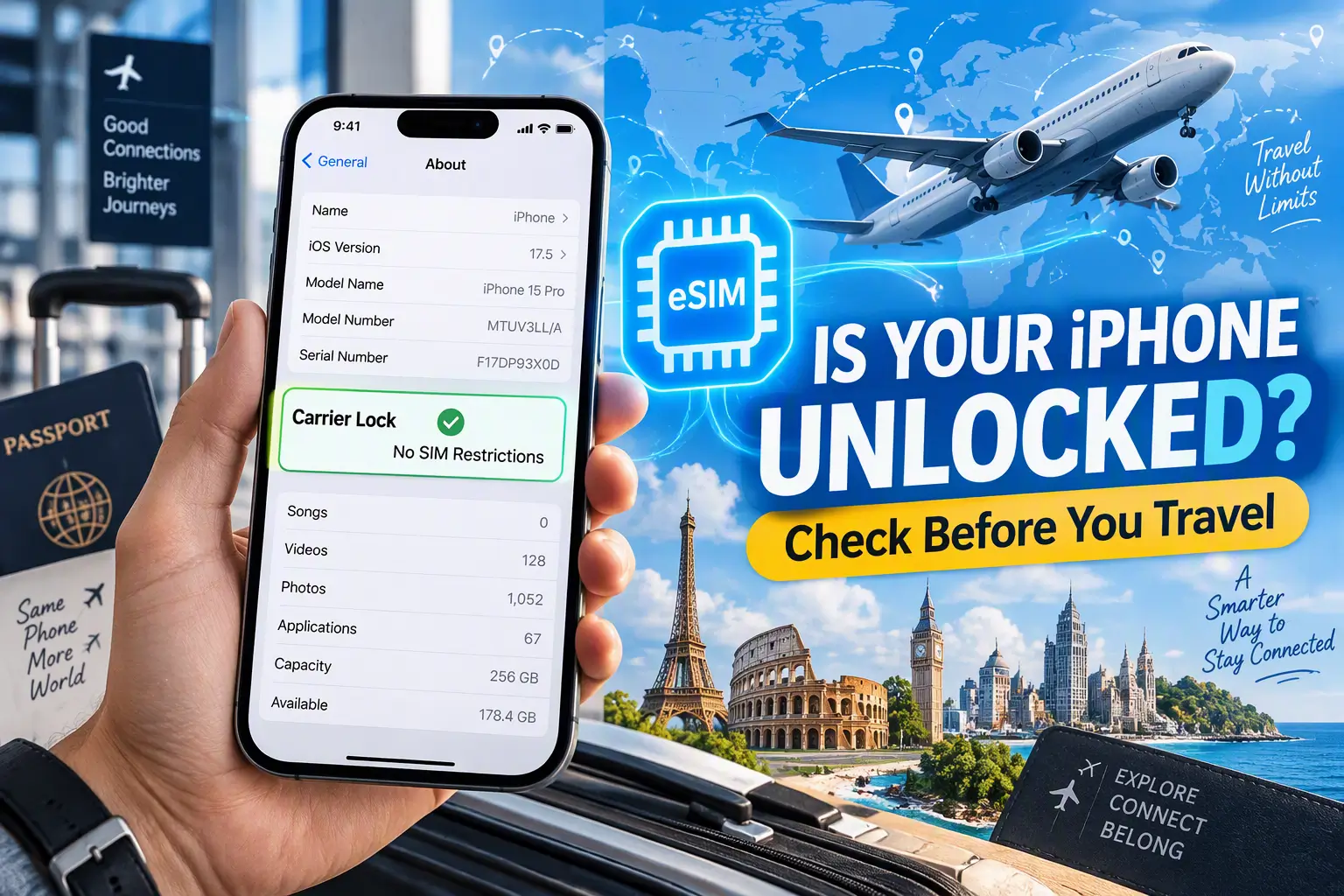
The device must be carrier-unlocked and compatible with the eUICC standard. Most flagship devices manufactured after 2018 (iPhone XS, Samsung S20, Google Pixel 3 and newer) are compatible. This is the foundation of eSIM Mobile deployment. IT managers should maintain an “Allow List” of compatible IMEI ranges.
Phase 2: Profile Provisioning
The administrator distributes a QR code or an activation string to the employee. In an enterprise environment, this is often handled through Mobile Device Management (MDM) software such as Jamf, Intune, or AirWatch. This allows for “Zero-Touch” installation where the digital cellular profile is pushed to the device without any user interaction, answering the user’s question of What is an eSIM and how to use it? before they even ask.
Phase 3: Network Management
Once installed, the user navigates to Settings > Cellular. Under the question What is an eSIM and how to use it?, the answer is simply toggling the “Turn On This Line” switch. The device will then automatically search for the partner network defined in the profile’s PLMN (Public Land Mobile Network) priority list, ensuring the strongest signal is always prioritized.
7. Sector-Specific Analysis: Logistics, Health, and Finance
The benefits of using eSIM vary significantly across industries. In the Logistics sector, eUICC modules allow for real-time tracking of high-value containers across 150+ countries without ever needing to swap a SIM card in a ruggedized tracker. This ensures 100% uptime for supply chain visibility.
In Healthcare, particularly for remote patient monitoring (RPM), eSIM Mobile ensures that life-critical devices stay connected to the best available network, regardless of the patient’s location. If one carrier’s signal drops, the eUICC can autonomously switch to a secondary profile. For finance professionals, What are the benefits of using eSIM? translates to secure, encrypted 2FA (Two-Factor Authentication) channels that are much harder to compromise than physical SIM cards which can be physically intercepted during transit.
8. Risk Management and Security Protocols (EAL4+ Certification)
Security is a paramount concern for any financial analyst evaluating telecommunications. Physical SIM cards are vulnerable to a variety of attacks, including SIM swapping (social engineering of carrier agents) and physical theft. An embedded SIM is significantly more secure because it cannot be removed from the device. If a corporate smartphone is stolen, the digital cellular profile remains locked within the hardware, preventing the thief from using the identity module in another device.
Furthermore, eUICC hardware typically carries Common Criteria EAL4+ certification, meaning it has undergone rigorous testing for cryptographic resilience. When considering What are the benefits of using eSIM?, the increased security posture of the eUICC technology provides an essential layer of protection for sensitive corporate data. The OTA (Over-the-Air) updates ensure that security patches for the SIM’s operating system are applied automatically, mitigating zero-day vulnerabilities in the cellular stack.
9. Future Outlook: From eUICC to iSIM (Integrated SIM)
The evolution doesn’t stop at eUICC. The industry is already moving toward iSIM (Integrated SIM), where the SIM functionality is integrated directly into the device’s System on a Chip (SoC) alongside the processor. This will further reduce the physical footprint and power consumption of devices. For those asking What are the benefits of using eSIM? today, the answer is that it is the bridge to an even more integrated future.
iSIM will enable even smaller IoT devices, such as smart glasses or medical wearables, to have native 5G connectivity without the bulk of a dedicated SIM slot or even a separate eSIM chip. This “softwarization” of hardware is the ultimate goal of the eSIM Mobile movement, where connectivity is a pure software layer that can be instantiated and destroyed via API calls.
10. Conclusion: The ROI of Connectivity Transformation
The evidence presented in this analysis confirms that the move toward eSIM Mobile is not merely a trend, but a calculated financial optimization. By eliminating the physical costs of logistics, reducing administrative overhead through automation, and providing access to competitive rates on a global scale, digital profiles offer a superior ROI compared to traditional SIM cards. So, What are the benefits of using eSIM? It is the convergence of cost reduction, operational speed, and military-grade security.
For organizations looking to pilot this technology, exploring eSIM free trial periods or small-scale deployments via eSIM Move is the recommended first step. The ability to manage global connectivity as a software asset will be the defining characteristic of the high-performance enterprise in the coming decade. Understanding What is an eSIM and how to use it? is the first step toward a more agile, secure, and cost-effective mobile strategy.
Frequently Asked Questions
Q: What are the benefits of using eSIM for my business?
A: Business benefits include reduced roaming costs, zero logistics for physical SIM distribution, and the ability to manage all employee lines from a single digital platform. It also enhances security by preventing physical SIM theft.
Q: What is an eSim Card & How Does It Work?
A: It is a permanent chip inside your phone that downloads carrier information over the internet using SM-DP+ servers, eliminating the need to insert a physical card.
Q: Can I have multiple eSIMs on one phone?
A: Yes, most modern phones allow you to store multiple profiles (usually up to 8 or 10), though only one or two can be active at the same time depending on the device’s DSDS capability.
Q: Is there an eSIM free trial available?
A: Many providers offer small initial data packages or “free” installation profiles to test network compatibility before committing to a larger corporate plan. This is ideal for testing eSIM Mobile connectivity.
Q: What is an eSIM and how to use it for international travel?
A: Simply purchase a profile for your destination, scan the QR code provided, and activate the line in your cellular settings. This avoids expensive roaming fees and the need to find a local store.