Skip to content
Berlin continues to stand as one of the premier technology hubs of Europe, bringing together a high density of software developers, digital creators, and international visitors. Navigating Germany’s distinct telecommunications market requires a reliable eSIM Mobile profile to ensure seamless data exchanges across various regional networks. For foreign tech professionals participating in hackathons, scaling startups, or attending local summits, having stable cellular internet from the moment they land is crucial. A versatile eSIM travel profile allows visitors to maintain immediate access to the web, helping them avoid local retail bureaucracies and stay connected effortlessly.
KEY TAKEAWAYS
- Digital profiles enable travelers to bypass complex German physical ID registration protocols.
- Seamless network switching keeps developers connected across major German infrastructure providers.
- Local data profiles ensure lower latency compared to legacy international roaming routing.
TABLE OF CONTENTS
- Direct Connection: Navigating Berlin’s Mobile Ecosystem with eSIM Mobile
- Technical Setup: Configuring eSIM Mobile Connectivity on Modern Hardware
- Network Infrastructure: Band Compatibility and German eSIM Mobile Speeds
- Practical Recommendations: Optimizing Your Travel Profile Data Plan
Direct Connection: Navigating Berlin’s Mobile Ecosystem with eSIM Mobile
DIRECT ANSWER: Berlin’s dynamic digital landscape is best navigated using an eSIM Mobile data plan, which allows developers and tourists to avoid local physical SIM registration rules. This technology delivers immediate 5G and LTE cellular connectivity, enabling smooth travel across German and European networks without the hassle of securing physical hardware.
Berlin has earned its reputation as Silicon Allee due to its high concentration of technology firms. However, its mobile market operates under strict federal regulations. Germany requires real-name registration for physical prepaid cellular lines, which involves an administrative VideoIdent verification process. For an eSIM Nomad arriving for a short-term convention, this check is often highly inconvenient and time-consuming.

By deploying an embedded travel profile before departure, visitors can activate their line over-the-air instantly. This digital-first strategy offers a straightforward path to high-speed internet, allowing tech-centric travelers to focus on their workflows rather than telecommunications paperwork.
Technical Setup: Configuring eSIM Mobile Connectivity on Modern Hardware
Setting up a digital cellular profile relies on Remote SIM Provisioning standards defined by the GSMA. Dual-SIM Dual-Standby technology allows a smartphone to host both a primary home-carrier subscription and a local European data plan on the same device.
To configure your digital profile:
- Obtain your specific destination QR code from an online provider before your flight.
- Open your mobile device settings (Network or Cellular Settings) and select the option to add a new network profile.
- Scan the QR code while connected to a stable Wi-Fi network, such as the public network at Berlin Brandenburg Airport.
- Define the newly downloaded profile as your primary cellular data path, while keeping your home physical SIM active for critical incoming text messages and security codes.
- Enable data roaming for the new profile within your phone settings to initiate localized cellular registration.
Network Infrastructure: Band Compatibility and German eSIM Mobile Speeds
Germany’s wireless ecosystem is managed by three major network operators: Deutsche Telekom, Vodafone Germany, and Telefónica O2. Understanding local frequency allocations is vital to obtaining fast, reliable coverage.
For optimal speeds in dense technology corridors like Adlershof Science Park or central coworking spaces, your device must support these frequencies:
- LTE Band 3 (1800 MHz) and Band 7 (2600 MHz): These high-frequency bands handle dense traffic in central urban districts.
- LTE Band 20 (800 MHz): A lower frequency crucial for deep indoor penetration and coverage in transit corridors outside the city core.
- 5G NR Band n78 (3.5 GHz): The primary spectrum utilized for high-speed, low-latency 5G deployments in urban Berlin.
International eSIM travel profiles utilize multi-network steering, allowing a device to switch between available networks automatically depending on signal strength. For an eSIM Nomad moving across EU borders, these configurations enable continuous internet access without manual adjustments.
Practical Recommendations: Optimizing Your Travel Profile Data Plan
To maintain fast network connections, rely on local routing solutions rather than legacy domestic packages. Traditional roaming plans from outside the European Union often route data traffic back to the home country’s central server, which introduces high latency and slows down critical developer tasks like SSH commands or repository pulls.
To secure instant connectivity, we recommend exploring eSIM Move’s digital profiles (https://esimmove.com), which avoid standard roaming markups. Utilizing optimized regional gateways keeps your latency minimal and your connection stable throughout your time in Germany.
GLOSSARY & FAQ
What is a digital cellular profile?
A digital cellular profile is an electronic carrier profile downloaded over-the-air to an integrated chip inside a compatible mobile device, eliminating the need for physical plastic cards.
How does cross-border routing affect latency?
Legacy roaming routes data traffic through your domestic home network before sending it back to your destination. Localized profiles route data traffic through regional gateways, significantly improving ping times.
Can I keep my physical SIM card active simultaneously?
Yes. Most modern mobile devices support Dual-SIM Dual-Standby (DSDS), which keeps your home physical card active for calls while your digital profile handles mobile data.
Does my phone need to be unlocked to use a digital profile?
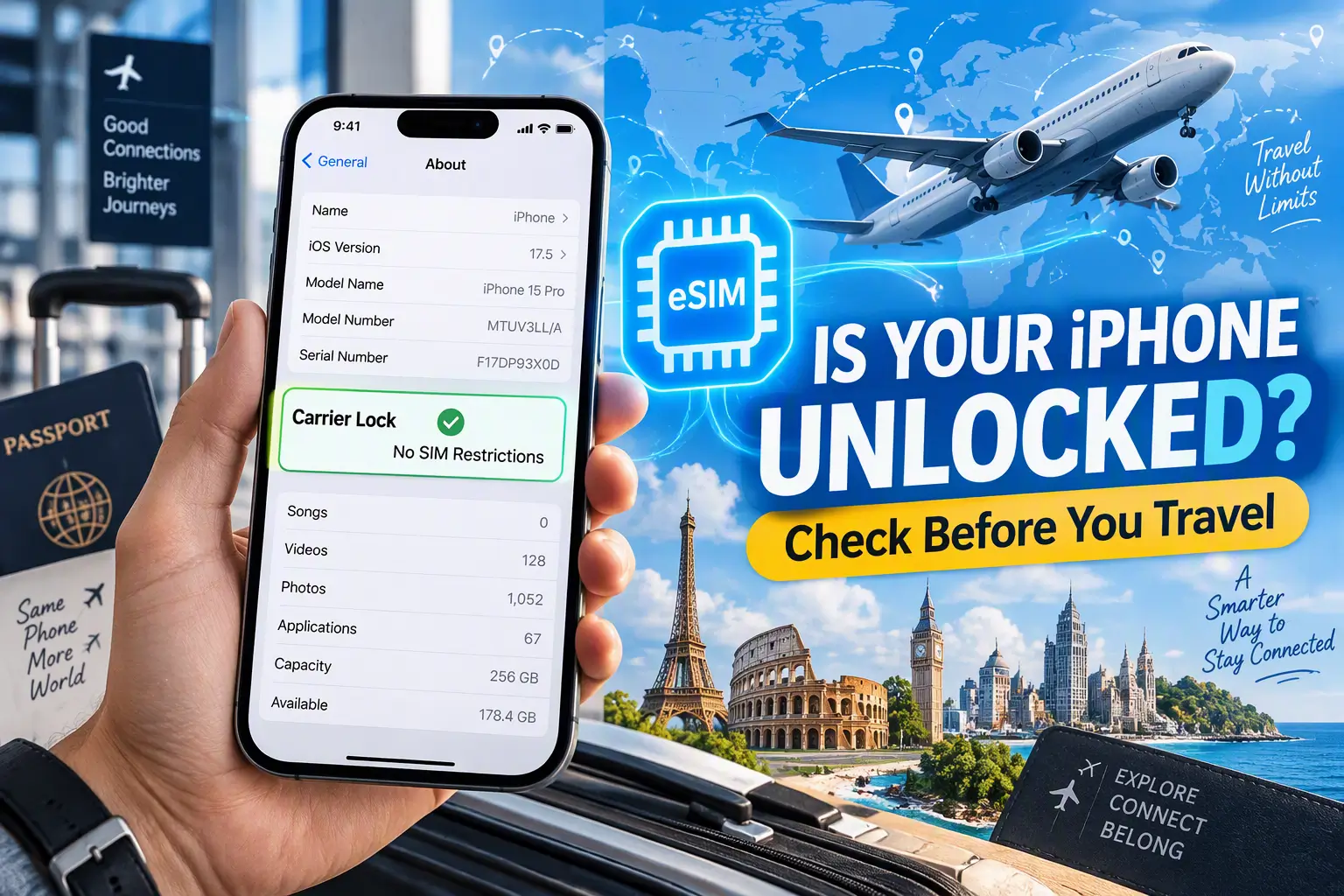
Yes. Your smartphone must be carrier-unlocked to accept digital cellular profiles from different networks or providers.
Are there local registration steps required for digital profiles?
Digital travel profiles acquired online bypass the strict physical registration processes required for local physical German SIM cards, making them instantly usable.