Skip to content
The South Korean telecommunications network is a hyper-dense ecosystem optimized for low latency and high bandwidth. For the arriving tech-forward traveler, connecting to this infrastructure requires modern mobile hardware. Utilizing an eSIM Nomad profile allows visitors to deploy local cellular connectivity directly onto their device’s secure element prior to landing in Seoul. This advanced approach bypasses slow legacy roaming systems, enabling immediate integration with South Korea’s fast-paced metropolitan cellular networks.
— KEY TAKEAWAYS —
- Traditional data roaming routes packets back to your home country, causing latency that defeats South Korea’s advanced local infrastructure.
- Pre-departure over-the-air profiling allows hardware setup before crossing borders, preventing physical SIM queues.
- Dual-SIM Dual-Standby operation allows travelers to isolate foreign data usage on a secondary local line while keeping primary networks active.
— TABLE OF CONTENTS —
- UNDERSTANDING THE SOUTH KOREAN CELLULAR LANDSCAPE WITH ESIMNOMAD
- HARDWARE COMPATIBILITY AND CONFIGURING YOUR ESIMNOMAD CONNECTION
- LOCAL FREQUENCY BAND OPTIMIZATION AND ESIMNOMAD METRICS
- PRACTICAL RECOMMENDATIONS AND SMART ROAMING CONFIGURATION
UNDERSTANDING THE SOUTH KOREAN CELLULAR LANDSCAPE WITH ESIMNOMAD
DIRECT ANSWER: To connect to South Korea’s networks, travelers can activate an eSIM Nomad profile before arrival. This digital cellular profile bypasses traditional physical SIM queues, downloading directly to any compatible smartphone via an over-the-air SM-DP+ server protocol. It enables immediate access to SK Telecom, KT, or LG Uplus networks with local data pricing.
In Seoul, networks operate on high frequencies designed to manage extreme subscriber densities. The major carriers have built deep 5G Standalone architectures. When you use an eSIMtravel configuration, your device connects natively to these infrastructures. This direct handshake prevents the high latency associated with home-network routing. Traditional roaming routes packets back to your home country, but a local digital network setup ensures your data remains in South Korea, achieving single-digit ping times. This is essential for latency-sensitive tasks like video conferencing, navigating Seoul’s complicated transit apps, or streaming high-resolution media.
HARDWARE COMPATIBILITY AND CONFIGURING YOUR ESIMNOMAD CONNECTION
Modern smartphones utilize an embedded chip called an eSIM Mobile secure element. This built-in microchip operates on the GSMA Remote SIM Provisioning standard, permitting multiple cellular subscriptions to reside on the same device. For international travelers, this hardware enables Dual-SIM Dual-Standby (DSDS) operation. You can keep your primary home network line active for critical two-factor SMS verification while routing all heavy cellular data through your local South Korean profile.
Configuring your virtual cellular profile is straightforward when executed prior to departure:
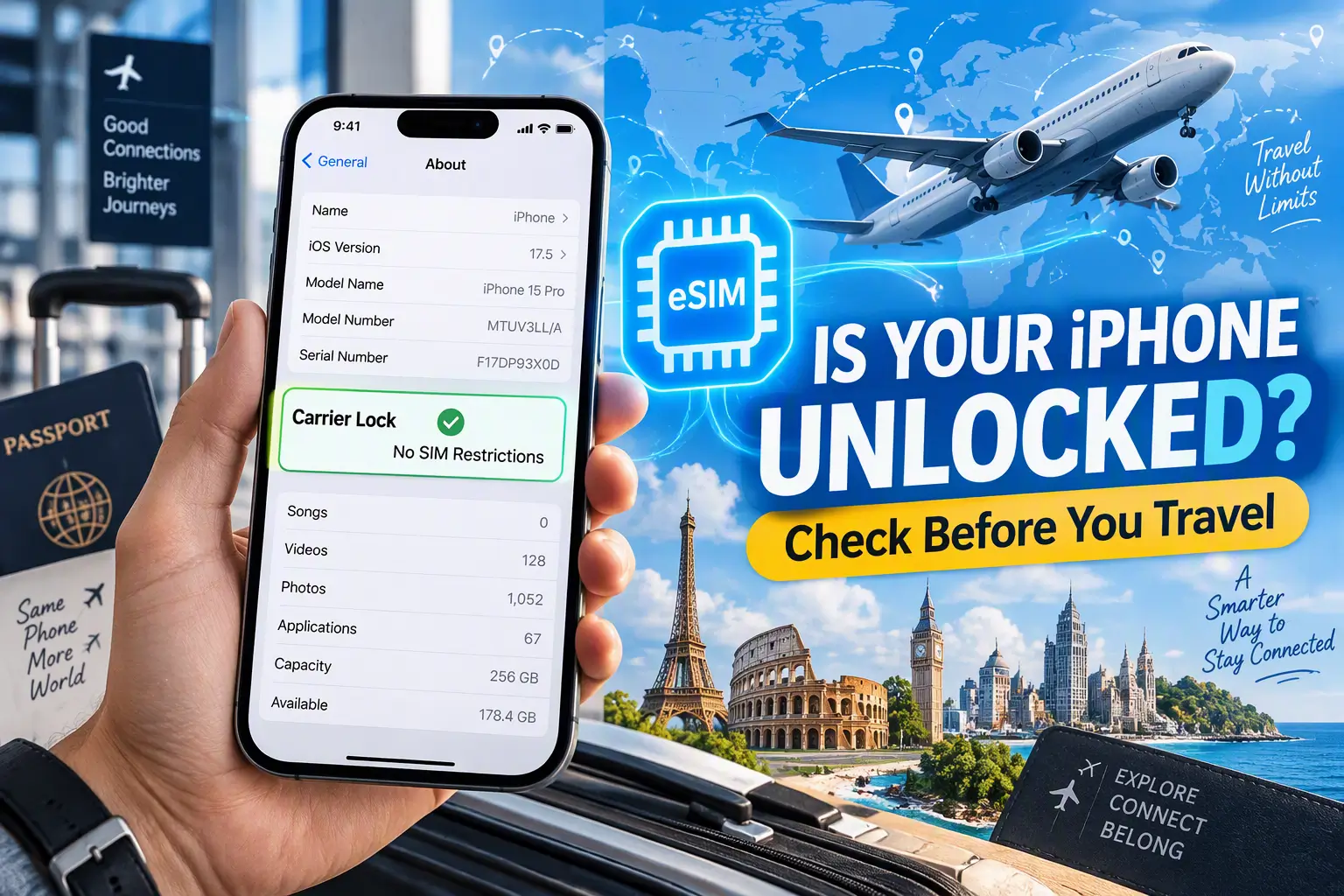
- Verify that your global smartphone is carrier-unlocked by checking your device system settings.
- Access your device’s cellular settings menu and select the option to add an additional mobile plan.
- Scan the activation QR code provided upon purchase to fetch the profile from the SM-DP+ server.
- Label the new connection line clearly to keep it distinct from your home carrier profile.

LOCAL FREQUENCY BAND OPTIMIZATION AND ESIMNOMAD METRICS
Technical Analysis: To achieve peak bandwidth, your handset’s baseband modem must align with local radio bands. South Korea relies heavily on LTE bands 1 (2100 MHz), 3 (1800 MHz), 5 (850 MHz), and 7 (2600 MHz). For 5G connections, the core band is n78 (3.5 GHz), paired with high-frequency mmWave bands for high-density public venues. Unlocked global smartphones equipped with modern Qualcomm Snapdragon or Apple A-series modems natively support these frequencies. When using your eSIM Nomad profile, your phone dynamically aggregates these bands to deliver reliable wireless speeds, ensuring steady throughput even when traveling deep within the Seoul metro transit system.
PRACTICAL RECOMMENDATIONS AND SMART ROAMING CONFIGURATION
To secure instant connectivity, we recommend exploring eSIM Move’s digital profiles, which bypass standard roaming markups. This ensures you avoid costly legacy roaming charges from your home network operator while enjoying local data performance. When deploying your digital profile, remember to toggle data roaming “On” exclusively for the travel profile, keeping it “Off” for your primary home carrier line. This configuration prevents unexpected roaming charges while keeping you fully reachable on your main personal or business phone number.
— GLOSSARY & FAQ —
eSIM Nomad: An optimized digital cellular profile designed for international travelers seeking high-performance connectivity.
eUICC: Embedded Universal Integrated Circuit Card, the physical microchip soldered into modern smartphones that securely stores virtual cellular profiles.
SM-DP+: Subscription Manager Data Preparation, the secure remote server architecture used to prepare and download virtual cellular profiles over-the-air.
Will this digital travel profile work on any smartphone? It requires a carrier-unlocked device with built-in eUICC hardware support.
Can I make cellular phone calls with this data plan? These virtual profiles are data-only, though you can easily make calls using voice-over-IP applications like WhatsApp, Teams, or FaceTime.
When should I install my digital profile? It is highly recommended to scan the QR code and install the profile using a stable home Wi-Fi network before departing for South Korea.